• We are a multilingual website again. Read the notice about this.
  • Understand AI use at MyPTSD: all AI use is explained in our AI help page. AI use is by choice here. It exists if you want it, but does nothing unless you choose to use it.

Sense Of Self

Status
Not open for further replies.

Mit

Gold Member
A few years ago I had to be assessed by a consultant. In amongst the resulting 30 page report he stated I needed to develop a better 'sense of self'. This has bothered me ever since I read it, because I had always felt I didn't know who was, what type of person I am, or how other people perceive me. I am talking about simple things, like am I a good person, or bad, am I intelligent, attractive, ugly, fun or boring etc. Not having a clear sense of self is frightening, it triggers feelings of anxiety within me.

I raised this with my therapist, and explained the void I experience when trying to connect with a sense of self. She explained some basic concepts and definitions and suggested the lack of connection I feel may be traceable back to my earliest years and events, such as being given up for adoption, being in care for the first five years and spending lots of time in hospital separated from my adoptive family. Over the last five years I have also received some very conflicting and confused messages about what sort of person I am, from friends and persons in positions of power and authority over me. My therapist mentioned how she thought people had many different parts to their personalities but I struggled to understand and feel what she meant by this, and we ran out of time.

I'm trying to understand what a sense of self is, and researching how I can feel more connected to me and the world. I wondered if anybody else feels this way, or has an understanding of 'sense of self' that can be explained simply, that I can understand and relate to. If anyone has experience of actually improving a sense self they could share, I'd be very grateful to hear about it.

Thanks - Mit
 
Hi Mit,
Sense of self is an an area I've only skimmed the surface of. I think a lot of us with early/developmental trauma have problems with it.

You have hit the nail in terms of the inner experience, in terms of not having a strong or stable sense of what sort of people we are. Because of that, it is easy for us to be swayed by significant experiences, and to adopt those opinions as our self image, in a very child like manner: authoritarian figure says I'm bad, therefore I'm a bad person... Which is a recipe for falling prey to the depressions and self destructive behaviours and being abused by others, that feelings of worthlessness can lead to.

The theoretical side seems to be based on bowlby's attachment theory, and the experimental work of the guy who's name I can't recall, who put baby rhesus monkeys in cages with "mothers" made from bare wire mesh, or mesh covered with fur fabric. Then observed the behaviour of those babies as they grew,compared to babies raised by living mothers.

There is also the effect of trauma on behaviour of infants. One experiment was with untraumatised rat pups,which happily played rough and tumble games, gaining a sense of self, other and reciprocity. Until a tuft of cat fur was dropped into the cage. After that they became timid, wary and never played again. Their environment had become life threatening and the ratties never regained their sense of innocent safety.

These are all covered, along with citations for the references in Sebern Fisher's book, neurofeedback in the treatment of developmental trauma. I can't afford a neurofeedback set up at present, but I certainly intend to try it on myself.

@joeylittle posted a link to a NY times piece about Marsha Linehan, coming out about her own history of having been the most disturbed patient in a psychiatric hospital. That provided a link missing from Fisher's book, that is where Linehan and Fisher met and became friends.

It was Fisher who introduced van der Kolk to neurofeedback, and he describes her as a calm and quietly confident individual... It works, developmental windoof of opportunity that were missed in infancy, seem as though they can be reopened and filled later.

@Chava is the other member who I'm aware of who has read Fisher's book. I value her take on it.

From our limited interactions, you come accross as someone who I warm to. Your concern for your partner and children comes across strongly, and your view of your adoptive parents comes accross as nuanced and balanced, and certainly not as a black and white extreme that would be characteristic of say a BPD style presentation of developmental trauma, and you are certainly not a numbed out psychopath... From a lay viewpoint, I think you have the basics to build on.

Sending you a pm
Hugs
@
 
I have struggled with this. Something that helps me, but I tend to forget about is to take inventory of my taste in certain things. Listing things like favorite type of movies, music, books, clothing ect. Help give me a bit of frame work to be able to say "This is apart of who I am."
 
I have struggled with a sense of self, because I had such early trauma through to age 18, I never developed a sense of myself, what my likes or dislikes were, and took on the beliefs of my parents regarding myself, and who was responsible for what happened to me.
I basically became zombie like, existing, going through the motions, not living, not feeling, and had taken all their beliefs that I was bad, unacceptable etc. to be my beliefs. When I left their influence I would take on the likes and dislikes of those people who I spent time with rather than have clear beliefs or likes or dislikes that were mine. Basically I was invisible, both to myself and others, so that I felt safer and had less expectation of being rejected.

It was only after addressing the lies my parents fed me and stripping away all the false beliefs I had about myself I realised how lost I felt in myself in that I knew so much of my life was a lie, that I no longer felt able to recognize truth from fiction, or myself. I knew who I wasn't, but I hadn't discovered who I was.

It has really been a work in progress which I expect will take me years, to discover my own interest, likes, dislikes and to reassess all of my relationships, as they too have had to adjust to the new me who is constantly changing.
 
suggested the lack of connection I feel may be traceable back to my earliest years and events, such as being given up for adoption, being in care for the first five years and spending lots of time in hospital separated from my adoptive family. Over the last five years I have also received some very conflicting and confused messages about what sort of person I am, from friends and persons in positions of power and authority over me.

The early trauma and attachment stuff sounds really likely connected to this sense of "self". @Anarchy mentioned a couple helpful books that I like. My favorite along these lines is probably a book called "Healing Developmental Trauma" by Laurence Heller. It was really validating...like everything that made me feel like I don't belong in this world was explain...including the difficult symptoms that don't seem directly connected to typical PTSD (but more like complex trauma or developmental trauma). Not sure if you're into reading, but for me that was a really good and affirming book. It helped me clarify goals with my therapist. "Connection" is a big part of it for me, and I believe that has a lot to do with this idea of "self."

I'm trying to understand what a sense of self is, and researching how I can feel more connected to me and the world. I wondered if anybody else feels this way, or has an understanding of 'sense of self'

So I do relate to this. I've had challenges feeling connected to or within myself, to others and to the world around me (like I'm always in a bubble). In the developmental trauma book, Heller describes the earliest trauma as being related to these connection challenges and that people in this group of experience often benefit from semi clear-cut roles that they can fit into. I thought I was doing somewhat okay adapting to my life until I had to quit my major self-defining gig. Then I was hurled into void and didn't know who I was anymore....disconnection and meaninglessness all over the place. I didn't realize how dependent I was on that role. I wonder if some of the conflicting messages you receive from people in your life, including authority figures, makes it harder for you to feel like you really fit in a clear-cut role? That can make it harder for us.

But even when the role stuff is unclear, I think focusing on working on that inner connection is really important. The outer connection can grow from that, but I'll say that a consistent connection to an understanding therapist is really important. That relationship can be very corrective, especially if they understand early trauma and attachment stuff. Along with all this stuff I've noticed how I've gone through life not really feeling like other people are real, or that I am real. For sure it was very rare that both myself and another could be real simultaneously. I started to really see how this worked in therapy. My therapist, while very gentle and easy to trust, did not totally feel "real" for a quite a long time. I'm glad I've stuck it out. Now that she seems "real" and I also feel more real to her, it feels like many things are subtly shifting.

As for inner connection and feelings of "self", it helps to pay attention to whatever I'm personally drawn to and nurture that by making time for it...nature, gardening, music, sometimes art. If you can even pick one thing that "makes sense" or feels true to you personally, that can be very helpful. For me these are things that I can enjoy in solitude so I'm not confused by other people's responses (and then in connection with others if it feels right, like attending a concert with someone who shares my music interests).

For me, nature and just going for a slow hike with my dog, is a good example of this. It's not that it helps me totally know who I am in all circumstances, but it gives me one feeling of being at peace and more connected within myself. If I can keep finding and creating these experiences I believe I will continue to nurture this connectivity within that will also help me feel grounded in my self around others (vs blown away, in a bubble, or a chameleon to other people's personalities). It's best if it's a slow and patient process where you can also learn self-compassion. I can't really sit still for long but have studied various mindfulness practices, and this helps too, whether meditation, yoga, or just a quiet walk aware of the sounds of nature, reflective journaling, or mindful projects or art work.

Sorry this got a little long. But know you aren't alone. I'm glad you have a therapist who is able to consider a connection to your earliest experiences because they are so important, but not many therapists know how to work well with early trauma and attachment issues. I was not adopted (you obviously had to wait a long time and might have missed out on vital "attachment" window and feelings of safety and opportunities for developing early self-other distinctions). But I was separated through a couple hospitalizations, following birth trauma, and then home with a disconnected, sometimes dissociative mother, who was also physically abusive and terrorizing at times. I depended on her but felt either invisible or terrified around her. I don't believe I ever felt connected to her, or myself...those early connections go together.
 
Last edited:
A trauma specialist told me that I needed to be self aware of the "adult" me, and when I have a panic episode, have the adult version of me take over and take care the inner child version of me that has been frozen in time inside. Hope it makes sense, but it is pretty difficult to explain.
 
she thought people had many different parts to their personalities

"No better friend, no worse enemy." ... Is one of my favorite quotes. Can you think about what each of those things entail? Vastly different things, and yet, they can both be embodied in the same person. All of those things, and far more.

Something that pops up in my status updates from time to time, meanwhile, is "Pick a life, any life, I've lived too many lives." Some people, many of my friends, have very singular lives. Their passion & their drive keeps them on a narrow path in life. Even so, they have very different aspects of their personalities.

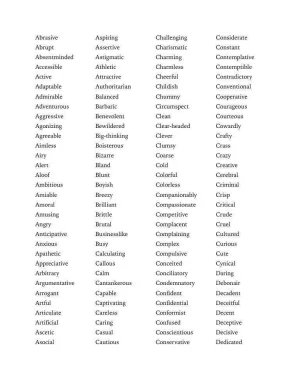
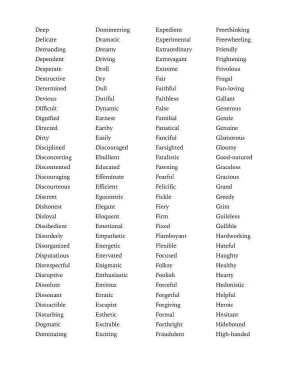
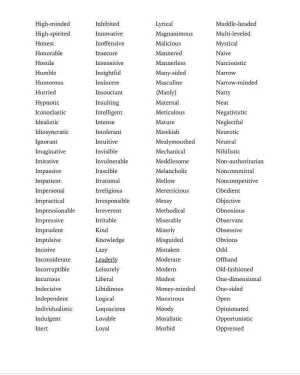
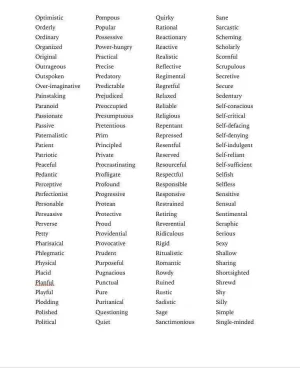
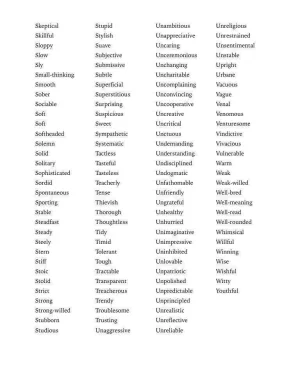
Okay... So backing up a minute... What the heck is personality? Basically, it's a combo of traits. Some sources try and split those traits into positive/ neutral/ negative... But really, that tells me more about the person who has compiled the list (or their culture!) than anything. Most "positive" traits have negative aspects & vice versa. In a bit, I'll go ahead and attach a 638 item long list. Cha. A whole helluva lot of possible traits! That list was complied by MIT, but I doubt it's complete. Really makes you scratch your head at 20 item lists, huh? LOL. We're complicated, what makes us each individuals.

To simplify for a moment though... Imagine the person who is incredibly forceful at work, incredibly gentle with children. Are they a forceful person, or a gentle person? Yes. Both. 2 different aspects, 2 different parts, of their personality.

Sometimes our personality traits compliment each other, or are expected. Other times, like being both forceful & gentle, they can seem at odds with each other. And yet? They're each perfect in their own environment. :) Our personalities aren't fixed. People change over time, adding or strengthening some traits, while others fall into disuse or are actively discouraged.

Coming of Age stories are largely about just this... Choosing to become the people we wish to be. Other stories, meanwhile often surround dealing with who've we become.

One reason many people go to therapy who don't have things like disorders that they're trying to learn to deal with or live within? Is because they are actively trying to change aspects to their personality, and need some help with that.
 

Attachments

  • image.webp
    image.webp
    70 KB · Views: 187
  • image.webp
    image.webp
    70.6 KB · Views: 178
  • image.webp
    image.webp
    75.4 KB · Views: 197
  • image.webp
    image.webp
    73 KB · Views: 181
  • image.webp
    image.webp
    70.5 KB · Views: 175
Last edited:
Thanks for the replies and suggested reading. I will follow them up.

sorry for the slow reply. I've been trying to digest all the comments. There's a lot for me to think about and get my head around. I'm seeing my therapist tomorrow and am better informed thanks to you, so we can discuss it some more.

I am always amazed and grateful for the willingness of others on this forum to share their own difficult experiences.

I'll let you know if I make any discoveries along the way. Firstly I've decided I really do need to know why my biological mother didn't want me, or couldn't keep me. Somehow this seems to have become a fundamental need, after 50 years of denying it.

I'm grateful to you all.

Mit
 
I have noticed in myself a lack of direction, so that I take direction from whoever I am with. In college, I switched majors according to whom I was associating with at the moment. One friend was into book design, another into jewelry design. I went from the one major to the other, trying to find a nitch for myself.

Later on in life, I met a man online (while I was married) and he made passes at me, refusing to back down, even after I told him over and over again that I was married and did not mess around on my husband. I could not get loose from him, not did I break down and submit to his demands. I was caught between and betwixt, unable to cut loose, unable to submit. I floundered between these two options repeatedly, until finally my husband died. Then , I even made tentative arrangements to go with him, but we could not pull it off, for neither of us had the money to bridge the gap between us physically, living at opposite ends of our country. It remains at this impasse now, so that we have dropped it. Still, I feel lost in all of this, never to be found again.

However, at least God has found me. Thankfully, His taking the lead in this matter has calmed my spirit beautifully. I am at peace with myself now.
 
Status
Not open for further replies.

Donation drives

2026 Donation Goal

Goal
$1,800.00
Earned
$910.00
This donation drive ends in
0 hours, 0 minutes, 0 seconds
  50.6%

Trending content

Featured content

Back
Top Bottom