I wanted to mention I took the DES II on my own. It is considered a screening inventory, NOT a diagnostic tool. None of the four psychologists who have treated me put much stock in the test.
From the
scoring page:
"Generally speaking, the higher the DES score, the more likely it is that the person has DID. In a sample of 1,051 clinical subjects, however, only 17% of those scoring above 30 on the DES actually had DID.
The DES is not a diagnostic instrument. It is a screening instrument. High scores on the DES do not prove that a person has a dissociative disorder; they only suggest that clinical assessment for dissociation is warranted. People experiencing DID do sometimes have low scores, so a low score does not rule out DID. In fact, given that in most studies the average DES score for a DID person is in the 40s, with a standard deviation of about 20, roughly 15% of clinically diagnosed DID patients score below 20 on the DES.
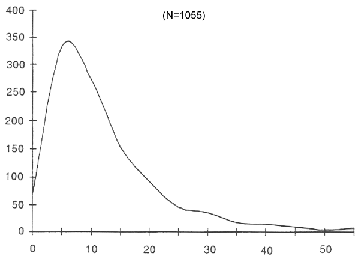
The figure shown below plots DES scores (horizontal scale) versus the number of subjects (vertical scale) from a sample of 1055 people. For further information about the DES, its validity and scoring, please visit the
Ross Institute.
(From
TraumaDissociation.com)
Clinical Uses of the Dissociative Experiences Scale:
Average DES Scores in research
General Adult Population 5.4
Anxiety Disorders 7.0
Affective Disorders 9.35
Eating Disorders 15.8
Late Adolescence 16.6
]Schizophrenia 15.4
Borderline Personality Disorder 19.2
Posttraumatic Stress Disorder 31
Dissociative Disorder Not Otherwise Specified 36
Dissociative Identity Disorder (MPD) 48




 Thread 'Six Ways to be The Persecutory Therapist *cue the thunder and lightning*'


