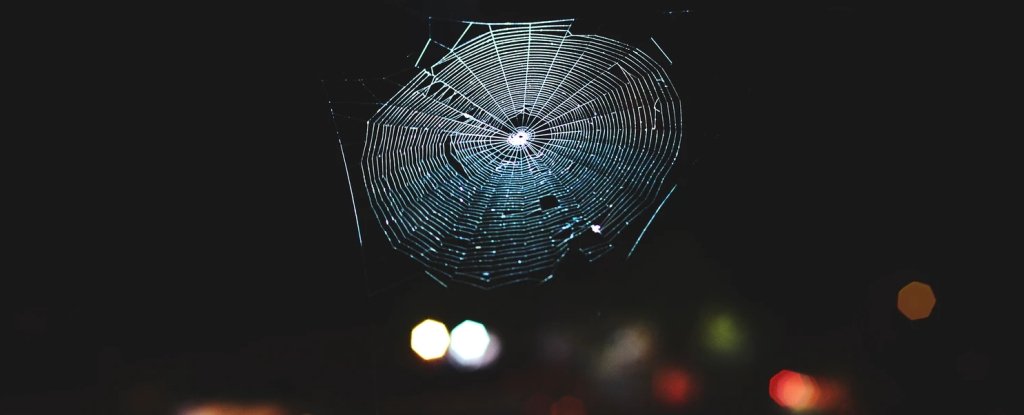
""By hearing it and seeing it at the same time, you can really start to understand the environment the spider lives in."
This VR environment, with realistic web physics, allows researchers to understand what happens when they mess with parts of the web, too. Stretch a strand, and its tone changes. Break one, and see how that affects the other strands around it. This, too, can help us understand the architecture of a spider's web, and why they are built the way they are.
And, perhaps most fascinatingly, the work enabled the team to develop an algorithm to identify the types of vibrations of a spider's web, translating them into "trapped prey", or "web under construction", or "another spider has arrived with amorous intent". This, the team said, is groundwork for the development of learning to speak spider - at least, tropical tent-web spider."